Arosemena, Noriega & Contreras |  +507 366-8400 |  anc@anorco.com.pa

Author: anorcodigitalweb

  • The Impact of Carnivals in Panama and Around the World

    The Impact of Carnivals in Panama and Around the World

    The Impact of Carnivals in Panama and Around the World

    Carnival represents Panamanians favorite celebration.  It is a time when traditional music, folkloric attire, and local gastronomy take center stage, reinforcing the country’s identity and allowing both locals and foreigners to enjoy its rich culture.

    The economic impact of carnival in Panama is significant. During those days, thousands of national and international tourists travel to the main cities and towns where the festivities take place, generating income for hotels, restaurants, transportation and shops.

    According to tourism sector data, carnival represents one of the busiest economic seasons in the country, boosting the creation of temporary jobs in sectors such as security, food and beverage sales, and event organization.

    On a global scale, iconic carnivals such as Rio de Janeiro in Brazil, Venice in Italy, Barranquilla in Colombia, and Mardi Gras in New Orleans, United States, also generate a massive economic impact, attracting millions of visitors and stimulating the local economies.

  • New Compliance Regulations for Panamanian Legal Entities

    New Compliance Regulations for Panamanian Legal Entities

    IMPORTANT NOTICE

    New Compliance Regulations for Panamanian Legal Entities

    The Government of Panama enacted Law 52 of 2016 (“Law 52“), which establishes the requirement for all corporations, limited liability companies, and private interest foundations (the “Legal Entities”) to keep accounting records and supporting documentation. 

    Subsequently, the Government enacted Law 254 of 2021, (¨Law 254¨), which introduced amendments to Law 52 establishing additional accounting keeping requirements for Legal Entities. 

    Recently, the Executive Branch issued Executive Decree No. 177 of December 30, 2024 (the ¨Regulation¨), which regulates Law 52 as amended by Law 254 (the “Law”). The Regulation introduces new provisions that have an impact on the requirements imposed on Legal Entities regarding the obligation to keep accounting records and supporting documentation.

    What is the object of the Regulation ? 

    The object of the Regulation is to expand on the obligation for all Legal Entities to report annually their financial situation, as well as the obligation of custody on the part of the resident agents, in accordance with the Law .

    What is the scope of the Law and the Regulation ? 

    The provisions contained in the Law and the Regulation apply to all Legal Entities organized in accordance with the laws of the Republic of Panama, that do not carryout operations that are perfected, consummated or take effect in the Republic of Panama, as well as those that are dedicated exclusively to being asset holders within and/or outside the territory of Panama.

    What Legal Entities are exempt from compliance with the obligations contained in the Law and the Regulation ? 

    The following Legal Entities are exempt from the obligations contained in the the Law and the Regulation:

    • Those that are tax payers in the Republic of Panama.
    • Those that are listed on a recognized local or international stock exchange.
    • Those that are owned by an international, multilateral organization or of a State; and,
    • Those that are shipowners or ship charterers exclusively registered under Panama’s international Merchant Marine Service.

    What are the categories of Legal Entities described in the Regulation and what documents must they deliver to the resident agent?

    The Regulation describes the following categories of Legal Entities and the documents they must deliver to their resident agent:

    1. Panamanian Legal Entity.

    Those Legal Entities that are dedicated exclusively to being asset holders within and/or outside the Republic of Panama, whose final beneficiaries reported to the Superintendence of Non Financial Subjects (the “Superintendence”) are exclusively Panamanian citizens.

    In this case, the legal Entity must deliver annually to the resident agent, a sworn declaration certifying the following:

    • That the legal entity is dedicated exclusively to being an asset holder within and/or outside the Republic of Panama; and,
    • That the legal entity does not carryout operations or activities that generates taxable income in the Republic of Panama.

    Notwithstanding the above, those Legal Entities whose final beneficiaries reported to the Superintendence are exclusively Panamanian citizens, which generate taxable income outside the Republic of Panama, must deliver annually to the resident agent, anyone of the following documents:

    • A financial statement; or,
    • A brief outline of the elements of the financial situation, the model of which is attached to the Regulation issued by a member of the board of directors or foundation council, as the case may be, the final beneficiary or a duly authorized representative of the latter.

    2. Foreign Legal Entity.

    Those Legal Entities that are dedicated exclusively to being asset holders within and/or outside the Republic of Panama and/or generate income, whose final beneficiaries reported to the Superintendence, result in at least one foreigner. 

    In this case, the legal entity must deliver annually to the resident agent any one of the following documents:

    • A financial statement; or,
    • A brief outline of the elements of the financial situation, the model of which is attached to the Regulation issued by a member of the board of directors or foundation council, as the case may be, the final beneficiary or a duly authorized representative of the latter.

    3. Legal Entity without operations.

    Those Legal Entities that regardless of whether the final beneficiary reported to the Superintendence is Panamanian or foreigner do not carryout any commercial activities, nor do they generate income within and/or outside the Republic of Panama, nor do they have assets within and/or outside the Republic of Panama. 

    In this case, the legal entity must deliver annually to the resident agent, a certification or sworn declaration that contains the following, to wit:

    • That it has not carried out nor does it engage in any commercial activity, nor does it perform any type of operations;
    • That it does not have income, nor does it perform activities that generate income within and/or outside the Republic of Panama; and,
    • That it does not have assets within and/or outside the Republic of Panama.

    Who issues the sworn declaration or certification required from the Legal Entities? 

    The certification or sworn declaration must be issued by a a member of the board of directors or foundation council, as the case may be, the final beneficiary or a duly authorized representative of the latter. 

    What are the obligations of the resident agent?

    The resident agent must submit annually a sworn declaration to the Directorate General of Income (DGI), which includes a detailed list of those Legal Entities of which it has the information established in the Regulation. 

    The sworn declaration must include the name and the Taxpayer identification number (known by the Spanish acronym of RUC), as of January 1, 2025 the obligation to report to the DGI will be no later than June 15 of each year.

    The presentation of this document will release the resident agent of the obligation of custody over the accounting records and supporting documentation.

    The lack of presentation of the sworn declaration on the part of the resident agent could result in the penalties established in Law 254.

    How long do the Legal Entities have to maintain accounting records and supporting documentation? 

    The Legal Entities must maintain accounting records and supporting documentation for a minimum period of five (5) years, either in physical or digital format, from the date of the respective incorporation or constitution and, in the event of dissolution, for a period of five (5) years after the registration of the instrument of dissolution in the Public Registry office in Panama.

    What are the penalties for the Legal Entities in not complying with the obligations contained in the Law and the Regulation ? 

    Not complying with the obligations contained in the Law and the Regulation could result in the following penalties for the Legal Entities:

    • Fines ranging from US$5,000.00 up to US$100,000.00.
    • Suspension of corporate rights.
    • Inability to register documents or receive certifications from the Public Registry office in Panama.

    What is the obligation of the resident agent if the Legal Entities do not comply with the obligations contained in the Law and the Regulation ? 

    The resident agent is required to resign from his position if the Legal Entities they represent fail to comply with the obligations contained in the Law and the Regulation. 

  • Impact of the Panama Canal on the Global and Local Economy

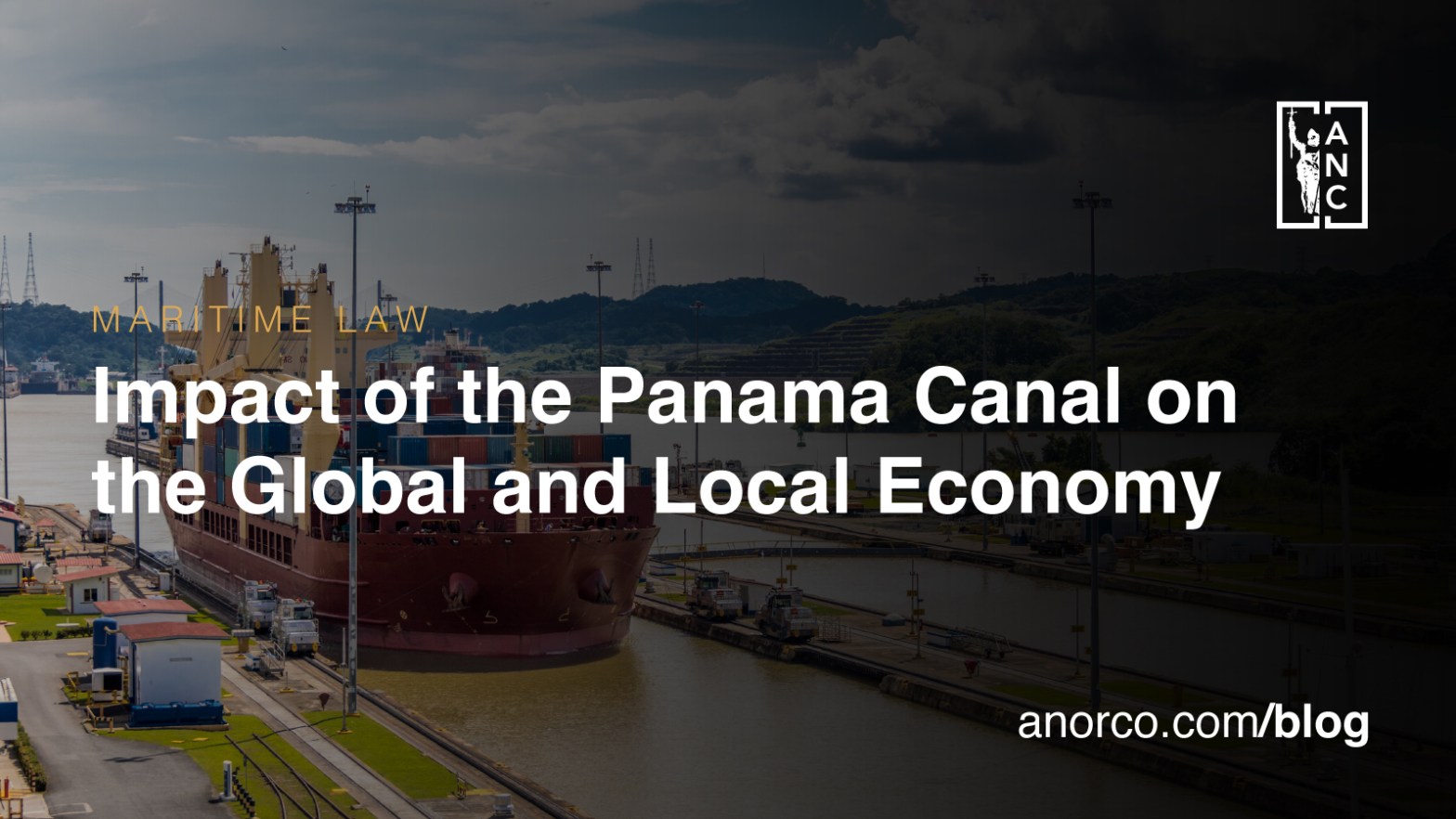
    Impact of the Panama Canal on the Global and Local Economy

    Impact of the Panama Canal on the Global and Local Economy

    The Panama Canal is one of the greatest engineering projects of history, not only does it connect the Atlantic and Pacific Oceans, but it is also an economic motor crucial for international commerce.

    Impact of the Panama Canal to International Commerce

    The Panama Canal facilitates the transit of more than 13,000 vessels yearly, transporting more than 500 million tons of cargo.  This flow represents a savings of up to 30% in maritime transporation costscompared with alternative routes such as Cape Horn.

    Key 2024 statistics:

    • Volume of cargo: 500+ million tons
    • Principal users: United States, China, and Japan
    • Income generated: US$3,300 million

    Primeros 15 Países que circulan por el Canal de Panama

    Economic Benefits for Panama and the World

    The Panama Canal is not only an economic motor for Panama, but also a strategic pilar for the world economy.  Since its opening, it has generated direct and indirect benefits which go beyond borders and sectors.  Following, we explore these effects in more detail:

    Contribution to the GDP of Panama

    The Panama Canal contributes approximately between 6% to 8% of the Panamanian GDP (with recent exceptions due to climate phenomenon).  This percentage translates annually in billion of dollar which benefit the country directly, promoting infrastructure programs, health and education.

    Key data:

    • In 2023 the Canal genetared US$3,300 million in income, representing 3.1% of GDP, a slight reduction due to adverse climate conditions which affected operations.
    • The expansion of the Canal in 2016 increased significantly its capacity, allowing the transit of larger vessels (Neopanamax) and multiplying potential income.

    Generation of Direct and Indirect Employment

    The Panama Canal is a principal source of employment for the country.  Moreover, of the 10,000 direct jobs that the Panama Canal Authority (ACP) offers, the Canal generates thousands of indirect jobs in sectors such as logistic, commerce, tourism and services.

    Key employment impacts:

    • Logistics sector: Transportation companies, storage and port services are benefited by the constant flow of cargo through the Canal.
    • Tourism: The Canal is also a global tourist attraction, attracting visitors that generate additional income to the local economy.

    Reduction of costs in the International Commerce

    The Canal permits the transit of more than 13,000 vessels annually, reducing significantly transportation times and costs between the Atlantic and Pacific Oceans.

    Benefits for global companies:

    • Savings in costs: The Canal tariffs represent a fraction of the total maritime transport cost.  This results in savings of up to 30% for companies in comparison with alternative routes, as Cape Horn.
    • Reduction in time: A vessel that transits the Canal can save up to 20 navigable days, depending on their route.

    Global Benefit:  Facilitate the Commerce of Strategic Goods

    The Panama Canal is fundamentally to mobilize key goods, such as food, oil, electronic products and cars.  In 2024, it facilitated the transport of more than 500 million tons of cargo, ranking as a critical point for global commerce stability.

    Example of products transported:

    • Technology: Electronic products from Asia to Latin America.
    • Food: Grains and agricultural products from North America to Asia.
    • Oil and natural gas: Exports from the United States to Asia and Europe.

    Attraction for Foreign Investment

    The Panama Canal is not only a point for maritime transit, but also an attraction for direct foreign investment (DFI).  Global companies use the country as a logistic base due to its strategic geographic position and the connectivity that the Canal offers.

    Impacts related to the investment:

    • Multinational companies have established centers of distribution in Panama to faccilitate access to Latin America markets.
    • The Colon Free Zone, one of the largest free zones in the world, depends directly of the traffic generated by the Canal to stock up and distribute merchandise.

    Environmental Contribution:  Reduction of Emissions

    Even though maritime transport has an environmental impact, the Panama Canal reduces significantly cargo emissions by reducing transport routes.  In 2024 it is estimated that the Canal saved more than 16 million tons of CO₂ in comparison with longer routes.

    The Panama Canal not only generates significant income for the country, but also drives global commerce, reduces costs, generates employment and attracts strategic investments. With this benefits, the Canal continues to be a key element not only for the Panamanian economy, but also for international commerce. However, to maintain and expand these benefits, it is crucial to confront the climate challenges and take advantage of the tecnological opportunities in the following years.

    What do you think about the impact of the Panama Canal has on the global economy? Let us know your comments.

    At ANORCO, our Maritime Law team specializes in providing legal services tailored to the unique needs of businesses operating in the maritime industry. From advising on Canal-related regulations to assisting with international trade and vessel compliance, we are here to ensure your operations remain seamless and legally sound.

    Visit our Maritime Law practice area to see how we can support your growth in this dynamic sector.

  • Happy holidays and, our best wishes for 2025!

    Happy holidays and, our best wishes for 2025!

    Happy holidays and, our best wishes for 2025!

    Dear Readers,

    As the year comes to an end, we want to take a moment to thank you for joining us on this journey. Your interest and support in every post have been the driving force behind our commitment to providing relevant, informative, and valuable content.

    2024 has been a year of great learning and shared achievements. This year alone, we’ve shared 36 postswith over 7,360 words of insights, ideas, and analysis to keep you informed and engaged. From significant legal reforms in Panama to opportunities in key sectors like tourism, commerce, and technology, we’ve had the privilege of being part of your reading experience and reflections.

    Now, as we prepare for the year-end celebrations, we wish you a holiday season filled with joy, peace, and unforgettable moments with your loved ones. May 2025 bring new opportunities, exciting challenges, and great success for all.

    We bid farewell to this year with the promise of returning in 2025 with even more content designed just for you. We are excited to continue exploring current topics, legal and economic trends, and everything that adds value to our communities together.

    Happy Holidays and a Prosperous New Year!

    The ANORCO Team

  • Panama’s Tourism Boom: Record Visitors Expected in 2024

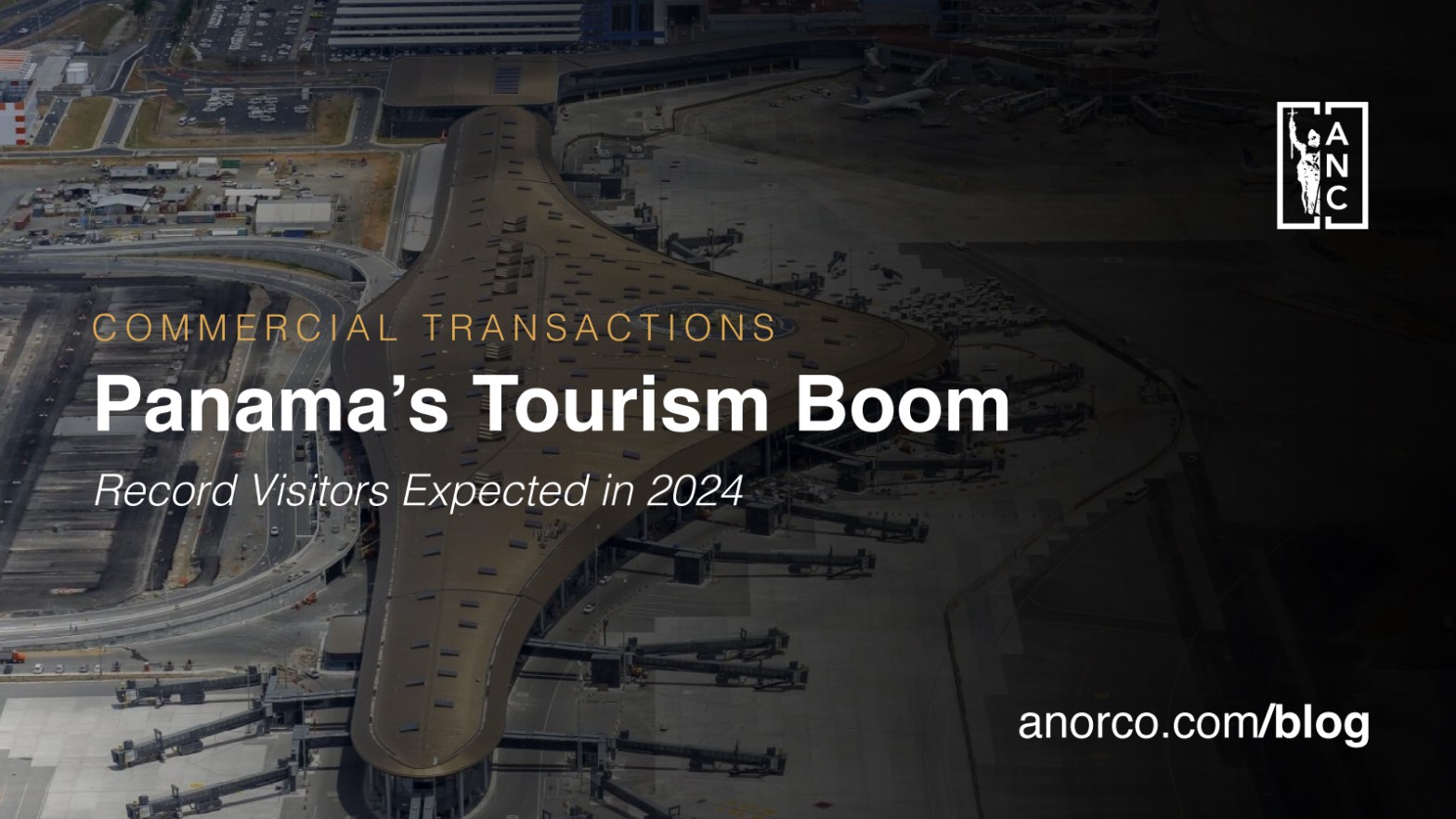
    Panama’s Tourism Boom: Record Visitors Expected in 2024

    Panama’s Tourism Boom: Record Visitors Expected in 2024

    The recent expansion of the Tocumen Airport has contributed to a record increase in the number of visitors which are expected to far exceed the 1.87 million tourists recorded in the year 2023.

    According to data from the Tourism Promotion Fund (PROMTUR), Panama expects to receive an estimate of 2.9 million tourists during the year 2024, which will produce an economic spillover estimated in US$1,800 million.

    The Tocumen airport, which in terms of connectivity is the most important in the region, has promoted strategic alliances with various international airlines, allowing not only the possibility of being a direct point-to-point, but also increasing the number of visitors arriving from the United States, Canada, Europe and South America, to name a few, and most importantly increasing the tourists stay times

    CONTACT US TODAY

    Interested in investing in Panama’s thriving tourism sector? Contact ANORCO for expert legal and business advice to help you navigate the opportunities

  • Panama’s Geisha Coffee: A Delicious and Coveted Treasure

    Panama’s Geisha Coffee: A Delicious and Coveted Treasure

    Panama’s Geisha Coffee: A Delicious and Coveted Treasure

    In recent years, Panama has distinguished itself worldwide due to its much coveted Geisha variety coffee.

    Panama’s Geisha coffee continues to break world records, achieving the price of US$10,000 per kilogram  during the 2023 Best of Panama electronic auction. Moreover, it is expected that the quality of last year’s winning coffee will allow Panama to aspire to a new record price in the auction slated for August 7, according to  Hunter Tedman, president of the Specialty Coffee Association of Panama  (known by the acronym of SCAP).

    Cultivation of Geisha Coffee on Baru Volcano

    Data obtained from the Ministry of Agricultural Development (MIDA) of Panama shows that Panama’s coffee planting is about 21,000 hectares, of which about 12,400 hectares are dedicated to the Arabica variety and the remainder to the Robusta variety.  On the other hand, of Geisha variety, 190,000 to 210,000 quintals are produced per year on small farms on the slopes of the Baru volcano, which is located 3,474 meters above sea level, being the highest point of the Panamanian territory.

    CONTACT US TODAY

    Looking to learn more about Panama’s specialty coffee or investing in the coffee industry? Contact ANORCO for expert advice and insights into Panama’s agricultural sector

  • Cryptocurrencies in Panama: Legal Challenges and Investor Risks

    Cryptocurrencies in Panama: Legal Challenges and Investor Risks

    Cryptocurrencies in Panama: Legal Challenges and Investor Risks

    What are cryptocurrencies?

    Cryptocurrencies are digital assets that are used for purchases, sales, investments and financial transactions in general. Currently, there are a few establishments in Panama that accept payment of goods using cryptocurrencies.

    Current state of regulation in Panama

    Notwithstanding the above, presently there is no legal framework that regulates cryptocurrencies in Panama, moreover, in July of 2023 the Supreme Court of Justice declared unconstitutional a bill which intended to regulate the use of cryptocurrencies.

    Warnings from the Superintendence of the Securities Market

    The fact that there is no regulation in force leaves users and investors of cryptocurrencies in Panama unprotected.  In this respect, by means of note dated 25 April 2018, the Superintendence of the Securities Market of Panama warned investors and the public in general to be prudent and be aware of the risks associated with cryptocurrencies, due to the fact that:

    1. They do not have a legal framework and therefore, are not under any supervision or oversight by a financial regulator in the Republic of Panama.
    2. They have no inherent value, they are intangible and their circulation is through the internet.
    3. They do not have the approval nor regulation of a central authority.
    4. They are vulnerable to money laundering.
    5. They are highly volatile and speculative assets.
    6. There is a high risk of fraud.

    CONTACT US TODAY

    Concerned about the legal implications of cryptocurrencies in Panama? Contact ANORCO for expert legal advice on navigating the risks and opportunities of digital assets

  • Gender Quota in Panama: Progress in Women’s Political Representation

    Gender Quota in Panama: Progress in Women’s Political Representation

    Gender Quota in Panama: Progress in Women’s Political Representation

    The modification of the Panamanian Electoral Code effected in the year 2007 represents a significant effort in favor of the political rights of women in Panama.  The new legislation reserves for women a quota of 30% of places within the political parties or any other position of popular election at the national level.  This regulation adds up to other efforts directed to reduce the gender gap in politics.

    In this sense, it is encouraging to know, that as a result of the recent May 5 presidential elections, out of the 71 deputies of the National Assembly elected for the new five-year period, 14 are women and 20% of other popular elected positions will also be held by women.

    CONTACT US TODAY

    Interested in learning more about legal and political reforms in Panama? Contact ANORCO for expert guidance and insights into Panama’s legal framework.

  • Environmental Law in Panama

    Environmental Law in Panama

    Environmental Law in Panama: The Landmark Case for Nature’s Right to Exist

    Panama has taken a pioneering step in recognizing nature’s rights, which could have far-reaching impacts on environmental law. Recent court cases have emphasized the protection of ecosystems, wildlife, and biodiversity, with Panama leading the way in safeguarding nature’s right to exist and thrive. The country’s legal system now recognizes that nature has intrinsic rights, moving beyond the traditional anthropocentric legal framework.

    This development in environmental law is critical for businesses and individuals involved in industries like construction, agriculture, and tourism. By embedding nature’s rights into the legal system, Panama has set a precedent for other countries in the region to follow.

    If you’re involved in any activity that may impact the environment, understanding the legal obligations under Panama’s environmental law is essential to avoid lawsuits and ensure compliance with new regulations.

    CONTACT US TODAY

    To learn more about how these legal changes could affect your business, contact Anorco for a consultation.

  • Panama’s Mining Law Reforms

    Panama’s Mining Law Reforms

    Panama’s Mining Law Reforms: What Businesses Need to Know About the Recent Supreme Court Ruling

    The recent ruling by Panama’s Supreme Court declaring the Minera Panamá contract unconstitutional has shaken the country’s business and legal sectors. This ruling highlights the need for businesses, particularly in the mining sector, to thoroughly understand Panama’s legal environment regarding contracts, environmental regulations, and corporate responsibilities.

    The ruling points out irregularities in how the contract was awarded, focusing on the lack of transparency and failure to follow tender processes. With mining contributing significantly to Panama’s GDP, this decision may lead to more stringent regulations and greater scrutiny of environmental and corporate compliance.

    Businesses operating in Panama, or considering entering the market, must be aware of the legal requirements surrounding corporate accountability and environmental sustainability. This includes understanding the importance of complying with Panama’s environmental laws and the potential for future legal challenges.

    CONTACT US TODAY

    Are you concerned about how this ruling could affect your business? Contact Anorco for expert legal advice on navigating Panama’s legal framework.

  • Public-Private Partnerships (PPP): Boosting Infrastructure Development

    Public-Private Partnerships (PPP): Boosting Infrastructure Development

    Public-Private Partnerships (PPP)

    Boosting Infrastructure Development

    Public-Private Partnerships (PPP) are agreements between the government and private companies to build or improve infrastructures such as roads, bridges, hospitals, schools and others. Pursuant to this economic model, the private company finances, builds, operates, and maintains the project for a set period of time.

    PPP Law in Panama

    In Panama, PPP are subject to by Law 93 of 2019, which establishes the legal framework by which they are regulated. This law aims to promote investment in public infrastructure by creating clear guidelines for collaboration between the public and private sectors. It ensures that these partnerships are transparent and beneficial for both the government and private companies, helping to drive national development.

    How do PPPs work

    The government identifies a need and collaborates with a private company that finances and executes the project. In return, the company receives payment based on the success of the project, ensuring that it meets quality standards.

    Benefits of PPPs

    • Shared financing: The private company provides resources, easing the financial burden on the government.
    • Increased efficiency: Private companies tend to be quicker and more effective in project execution.
    • Shared risks: The risks are distributed between the parties, reducing the government’s load.

    PPPs are an excellent tool for improving public infrastructure, allowing the government to leverage private investment and enhance services for the community.

    Need help in dealing with legal issues related to the PPP, contact ANORCO today for expert legal advice.

    CONTACT US TODAY

    Need help in dealing with legal issues related to the PPP, contact ANORCO today for expert legal advice.

  • Work Permit established by special immigration conditions

    Work Permit established by special immigration conditions

    Work Permit established by special immigration conditions

    Pursuant to Executive Decree No. 6 of 2023, relevant changes are introduced in the regulation of labor immigration, including the creation of the category of Work Permit established by special immigration conditions.

    Foreigners who have one of the following immigration categories can apply for said work permit:

    1. National migrant worker from specific countries that maintain friendly, professional, economic and investment relations with the Republic of Panama;
    2. Migrant worker with a Residence Permit authorized by the General      Immigration Regularization program;
    3. Professional migrant worker;
    4. Migrant worker for family reunification for resident dependents.
    5. Students.

    Applicants must comply with the conditions of self-employed or employed, to wit:

    • Self-Employed: when the applicant is found to be properly developing a permitted income-generating activity or is self-employed directly in a condition of economic dependence or legal subordination and not developing activities that are by law for Panamanians.

    For this procedure, a Notice of Operation must be provided in the name of the applicant and the Single Taxpayer Registry and for the extension, an Income Tax Declaration must be submitted.

    • Employed: when the applicant maintains an employment relationship based to an employment contract under the conditions of legal subordination and economic dependence. In this case, the Ministry of Labor will apply the percentage rules established by law for the hiring of foreigners, i.e., 10% or 15% of the Panamanian workforce of the company that does the hiring.

    CONTACT US TODAY

    Need assistance with your Work Permit application under these new immigration conditions?
    Contact us today for expert guidance on immigration and legal planning!

  • The IMG or GloBE and its implications

    The IMG or GloBE and its implications

    The IMG or GloBE and its implications

    Since 2017, the G20 and the OECD have collaborated on a project to address the erosion of the tax bases and profit shifting, which is based on two fundamental pillars.

    Pillar One, which seeks to distribute the results obtained by multinational companies, allowing them to be taxed where their clientele is located, and Pillar Two, which proposes establishing an effective global minimum tax of 15% (IMG or GloBE).  For the IMG to be applicable to a company the joint billing (Headquarters and subsidiaries) must reach 750 million euros or its equivalent, amount which is subject to review in 2030.

    The implementation of the IMG seeks greater tax and reputational certainty. However, it also presents challenges for governments in the application of international agreements and treaties, requiring adjustments in national tax legislation, as well as for companies which will have to adjust their guidelines to comply with the new regulations.

    Currently in Panama, the Directorate of International Financial and Fiscal Strategy and the General Directorate of Revenue are currently studying the possible ways of implementing the IMG, without affecting the legal security of close to 10 local Panamanian capital companies and 60% of foreign capital companies located in the country.

    CONTACT US TODAY

    Ready to navigate the complexities of global taxation?
    Contact one of our expert lawyers in tax planning today for tailored guidance and solutions

  • Panama Canal prepares to increase ship transits amid rainy season

    Panama Canal prepares to increase ship transits amid rainy season

    Panama Canal Prepares to Increase Ship Transits Amid Rainy Season

    Due to the recent drought that affected the water levels of the Gatun and Alajuela lakes, the Panama Canal was forced to reduce to 27 the daily transit of ships. However, with the onset of the rainy season, the Panama Canal is now preparing to gradually increase the number of ships passing through the locks. In this respect, it is predicted that the daily transits will gradually increase, approaching the normal capacity of 36 transits by late 2024 or early 2025, if weather conditions permit.
     
     
  • The Panama Dry Canal: Strengthening Maritime Logistics

    The Panama Dry Canal: Strengthening Maritime Logistics

    The Panama Dry Canal

    For the purpose of strengthening the growth of the maritime, logistic and national ports national sector, the Cabinet Council approved Executive Decree No. 013 of March 13, 2024, that establishes the Multimodal Dry Canal for Transshipment of Goods of the Republic of Panama, named Omar Torrijos Herrera, and dictates other provisions.

    This regulation is complementary to the Central American Uniform Customs Code and its regulations, with the objective of declaring the Dry Canal as the only primary zone of special jurisdiction of the multimodal customs territory for the transshipment of goods of the Republic of Panama.

    The Dry Canal is integrated by: the railways, roads, highways, international airports, free zones, special economic areas, ports, border crossings and other areas and/or private companies that provide logistics services.

    Benefits:

    • Take advantage of the importance of our geographical location, as has been done since the creation of the Isthmus.
    • Integration and strengthening of our logistics platform.
    • Complement for the Panama Canal operations.
  • Artificial Intelligence in Healthcare: Revolutionizing Patient Care

    Artificial Intelligence in Healthcare: Revolutionizing Patient Care

    Artificial Intelligence in the field of Healthcare

    In the field of healthcare, Artificial Intelligence has brought with it a revolutionary promise of unparalleled change and progress.

    One of its greatest achievements has been the ability to analyze large amounts of medical data in record time. Artificial Intelligence algorithms can identify patterns and trends in medical images, such as X-rays or MRI scans, helping doctors detect diseases at early stages.

    Artificial Intelligence drives personalized medicine, as its systems can analyze a patient’s genetic and clinical data to recommend treatments tailored to their unique profile, improving efficiency and reducing side effects.

    It is also having a notable impact on patient care. Artificial Intelligence chatbots and telemedicine systems can provide 24/7 medical guidance, improving access to healthcare, especially in remote or medically underserved areas.