Tag: Panama Canal

  • Panama Canal at 111 Years: Future Diversification Projects

    Panama Canal at 111 Years: Future Diversification Projects

    Panama Canal at 111 Years: Future Diversification Projects

    The Panama Canal, one of the great landmarks of world engineering and a driving force of Panama’s economy, celebrated this year 111 years of operation. Since its opening in 1914, the interoceanic waterway has become a strategic pillar for global trade, facilitating the connection between the Atlantic and Pacific Oceans.

    On the occasion of this anniversary, the Administrator of the Panama Canal Authority (ACP), Ricaurte Vasquez, presented the entity’s vision for the coming years: to diversify activities beyond the operation of the waterway and strengthen the Canal’s role as a hub of logistical, energy, and social development for the country.

    The main projects included in this strategy are:

    1. Development of Port Terminals

    The ACP is evaluating the creation of up to four new port terminals, mainly on the west bank of the Canal.  The goal is to expand logistics capacity and recover a strategic model that will allow Panama to obtain greater benefits. For this, concession schemes will be reviewed so that the country receives a fairer return for the use of its assets.

    2. Energy Corridor

    One of the most ambitious projects is the construction of a pipeline between both banks of the Canal.  This corridor would be designed to transport Liquefied Petroleum Gas (LPG) and other fuels, helping to reduce congestion in the maritime route and optimize its operation.

    3. Complementary Road Ring

    The diversification vision is not limited to maritime and energy matters.  The ACP is also planning the construction of a road ring that would complement the land connectivity around the Canal, facilitating the transport of goods and people in strategic areas.

    4. Rio Indio Project: water security and drinking water

    One of the greatest challenges the Canal faces is water supply.  For this reason, the Río Indio Project is being promoted, which consists of the construction of a reservoir or artificial lake. This will be essential not only to guarantee the operation of the interoceanic waterway, but also to secure drinking water for millions of Panamanians.

    5. An Investment Plan

    All these projects are part of an investment plan estimated at USD 8 billion, which the ACP will carry out over the next decade. It is the most ambitious undertaking in years, aimed at consolidating the Canal not only as a maritime route but also as a comprehensive platform for logistics and energy services.

  • The History of the Panama Canal: From Balboa to a Global Engineering Marvel

    The History of the Panama Canal: From Balboa to a Global Engineering Marvel

    The History of the Panama Canal: From Balboa to a Global Engineering Marvel

    Did you know…

    The history of the Panama Canal begins in 1513 when Vasco Nuñez de Balboa crossed for first time this narrow strip of land on the isthmus separating the Atlantic and Pacific Oceans.

    France began construction of the canal in 1881, but was halted in 1889 due to lack of investors confidence, engineering problems, and the high mortality rate among workers due to tropical diseases.

    Construction of the Panama Canal officially resumed on May 4, 1904, under the leadership of the United States, with the aim of saving time and money in commercial and military shipping.

    Faced with significant technical and sanitary challenges, under the administration of the engineers John Stevens, and later George Washington Goethals, an ambitious plan was designed and executed that included a rigorous sanitation program to rid the isthmus of diseases and the construction of enormous locks to raise and lower ships between different levels of the canal.

    After a decade of hard work and with the participation of thousands of workers of diverse nationalities, albeit more from the Caribbean area, the Panama Canal was finally inaugurated on August 15, 1914, coinciding with the beginning of the First World War.


  • The Fourth Bridge over the Panama Canal: Unlocking Economic Growth in Panama Oeste

    The Fourth Bridge over the Panama Canal: Unlocking Economic Growth in Panama Oeste

    The Fourth Bridge over the Panama Canal: Driving Growth in Panama West

    The construction of the Fourth Bridge over the Panama Canal represents a strategic step toward enhancing national connectivity and unlocking economic potential in one of the fastest-growing regions of the country: Panama West or in Spanish Panama Oeste.

    Once completed in 2028, this modern structure will significantly reduce travel times between Panama City and the western provinces. Improved mobility will make the area more accessible for workers, students, investors, and visitors.

    From a development perspective, the bridge is expected to serve as a catalyst for business expansion, residential growth, and tourism. With reliable infrastructure in place, Panama Oeste is poised to attract commercial activity, promote new housing developments, and strengthen the service industry.

    Beyond the direct impact on transportation, the project will generate thousands of jobs during construction and in the long term, fostering greater economic inclusion for surrounding communities.

    This bridge is more than a public work, it reflects Panama’s commitment to sustainable growth through strategic investment in infrastructure for future generations.


  • Impact of the Panama Canal on the Global and Local Economy

    Impact of the Panama Canal on the Global and Local Economy

    Impact of the Panama Canal on the Global and Local Economy

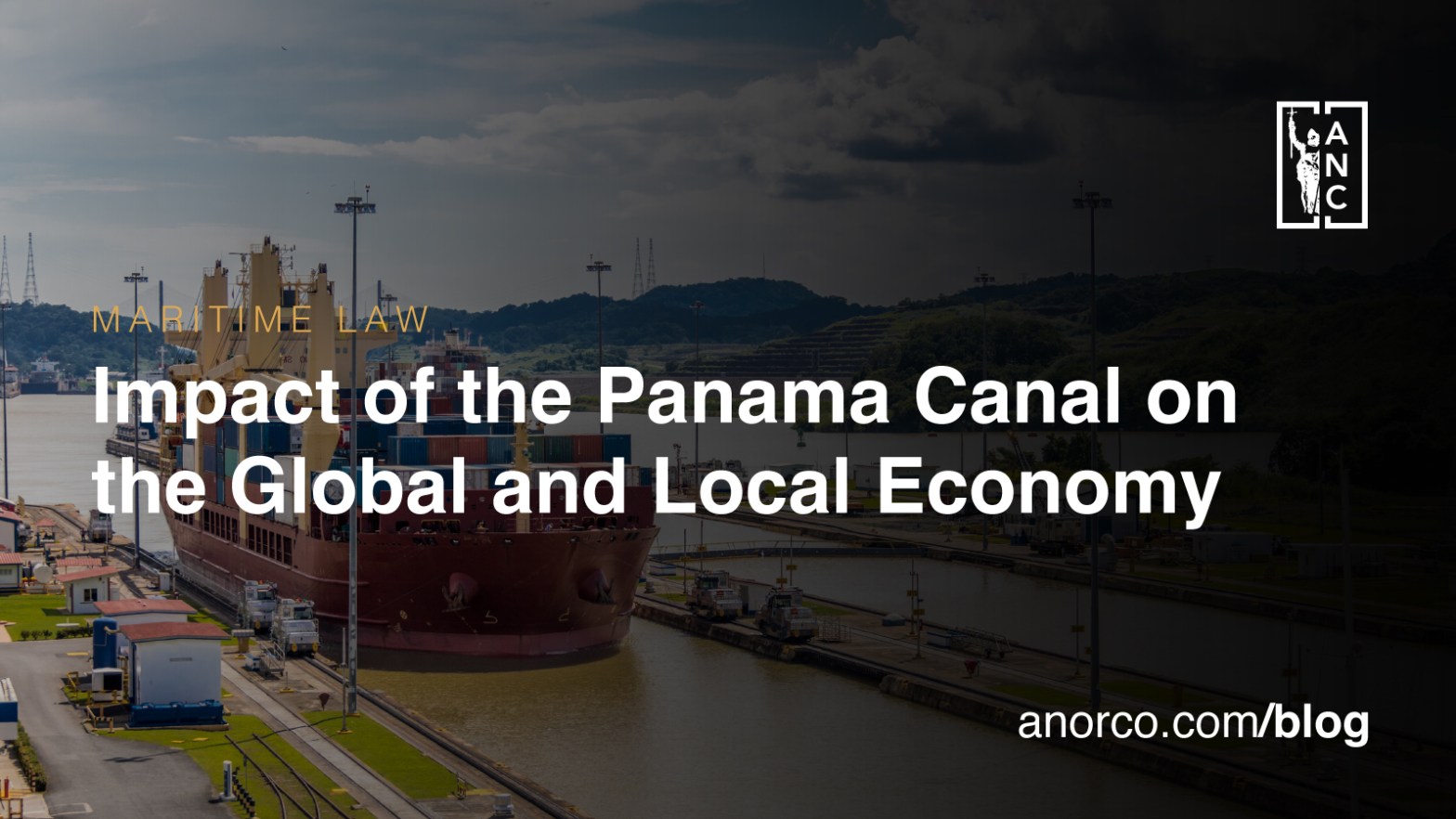
    The Panama Canal is one of the greatest engineering projects of history, not only does it connect the Atlantic and Pacific Oceans, but it is also an economic motor crucial for international commerce.

    Impact of the Panama Canal to International Commerce

    The Panama Canal facilitates the transit of more than 13,000 vessels yearly, transporting more than 500 million tons of cargo.  This flow represents a savings of up to 30% in maritime transporation costscompared with alternative routes such as Cape Horn.

    Key 2024 statistics:

    • Volume of cargo: 500+ million tons
    • Principal users: United States, China, and Japan
    • Income generated: US$3,300 million

    Primeros 15 Países que circulan por el Canal de Panama

    Economic Benefits for Panama and the World

    The Panama Canal is not only an economic motor for Panama, but also a strategic pilar for the world economy.  Since its opening, it has generated direct and indirect benefits which go beyond borders and sectors.  Following, we explore these effects in more detail:

    Contribution to the GDP of Panama

    The Panama Canal contributes approximately between 6% to 8% of the Panamanian GDP (with recent exceptions due to climate phenomenon).  This percentage translates annually in billion of dollar which benefit the country directly, promoting infrastructure programs, health and education.

    Key data:

    • In 2023 the Canal genetared US$3,300 million in income, representing 3.1% of GDP, a slight reduction due to adverse climate conditions which affected operations.
    • The expansion of the Canal in 2016 increased significantly its capacity, allowing the transit of larger vessels (Neopanamax) and multiplying potential income.

    Generation of Direct and Indirect Employment

    The Panama Canal is a principal source of employment for the country.  Moreover, of the 10,000 direct jobs that the Panama Canal Authority (ACP) offers, the Canal generates thousands of indirect jobs in sectors such as logistic, commerce, tourism and services.

    Key employment impacts:

    • Logistics sector: Transportation companies, storage and port services are benefited by the constant flow of cargo through the Canal.
    • Tourism: The Canal is also a global tourist attraction, attracting visitors that generate additional income to the local economy.

    Reduction of costs in the International Commerce

    The Canal permits the transit of more than 13,000 vessels annually, reducing significantly transportation times and costs between the Atlantic and Pacific Oceans.

    Benefits for global companies:

    • Savings in costs: The Canal tariffs represent a fraction of the total maritime transport cost.  This results in savings of up to 30% for companies in comparison with alternative routes, as Cape Horn.
    • Reduction in time: A vessel that transits the Canal can save up to 20 navigable days, depending on their route.

    Global Benefit:  Facilitate the Commerce of Strategic Goods

    The Panama Canal is fundamentally to mobilize key goods, such as food, oil, electronic products and cars.  In 2024, it facilitated the transport of more than 500 million tons of cargo, ranking as a critical point for global commerce stability.

    Example of products transported:

    • Technology: Electronic products from Asia to Latin America.
    • Food: Grains and agricultural products from North America to Asia.
    • Oil and natural gas: Exports from the United States to Asia and Europe.

    Attraction for Foreign Investment

    The Panama Canal is not only a point for maritime transit, but also an attraction for direct foreign investment (DFI).  Global companies use the country as a logistic base due to its strategic geographic position and the connectivity that the Canal offers.

    Impacts related to the investment:

    • Multinational companies have established centers of distribution in Panama to faccilitate access to Latin America markets.
    • The Colon Free Zone, one of the largest free zones in the world, depends directly of the traffic generated by the Canal to stock up and distribute merchandise.

    Environmental Contribution:  Reduction of Emissions

    Even though maritime transport has an environmental impact, the Panama Canal reduces significantly cargo emissions by reducing transport routes.  In 2024 it is estimated that the Canal saved more than 16 million tons of CO₂ in comparison with longer routes.

    The Panama Canal not only generates significant income for the country, but also drives global commerce, reduces costs, generates employment and attracts strategic investments. With this benefits, the Canal continues to be a key element not only for the Panamanian economy, but also for international commerce. However, to maintain and expand these benefits, it is crucial to confront the climate challenges and take advantage of the tecnological opportunities in the following years.

    What do you think about the impact of the Panama Canal has on the global economy? Let us know your comments.

    At ANORCO, our Maritime Law team specializes in providing legal services tailored to the unique needs of businesses operating in the maritime industry. From advising on Canal-related regulations to assisting with international trade and vessel compliance, we are here to ensure your operations remain seamless and legally sound.

    Visit our Maritime Law practice area to see how we can support your growth in this dynamic sector.

  • Panama Canal prepares to increase ship transits amid rainy season

    Panama Canal prepares to increase ship transits amid rainy season

    Panama Canal Prepares to Increase Ship Transits Amid Rainy Season

    Due to the recent drought that affected the water levels of the Gatun and Alajuela lakes, the Panama Canal was forced to reduce to 27 the daily transit of ships. However, with the onset of the rainy season, the Panama Canal is now preparing to gradually increase the number of ships passing through the locks. In this respect, it is predicted that the daily transits will gradually increase, approaching the normal capacity of 36 transits by late 2024 or early 2025, if weather conditions permit.
     
     
  • The Panama Dry Canal: Strengthening Maritime Logistics

    The Panama Dry Canal: Strengthening Maritime Logistics

    The Panama Dry Canal

    For the purpose of strengthening the growth of the maritime, logistic and national ports national sector, the Cabinet Council approved Executive Decree No. 013 of March 13, 2024, that establishes the Multimodal Dry Canal for Transshipment of Goods of the Republic of Panama, named Omar Torrijos Herrera, and dictates other provisions.

    This regulation is complementary to the Central American Uniform Customs Code and its regulations, with the objective of declaring the Dry Canal as the only primary zone of special jurisdiction of the multimodal customs territory for the transshipment of goods of the Republic of Panama.

    The Dry Canal is integrated by: the railways, roads, highways, international airports, free zones, special economic areas, ports, border crossings and other areas and/or private companies that provide logistics services.

    Benefits:

    • Take advantage of the importance of our geographical location, as has been done since the creation of the Isthmus.
    • Integration and strengthening of our logistics platform.
    • Complement for the Panama Canal operations.
  • The Impact of El Niño on the Panama Canal: Drought and Transit Restrictions

    The Impact of El Niño on the Panama Canal: Drought and Transit Restrictions

    The Impact of El Niño on the Panama Canal: Drought and Transit Restrictions


    Among the effects of the El Niño climate phenomenon in Panama, is there are very intense rains towards the Atlantic slope that cause flooding and a decrease in rainfall towards the regions located on the Pacific slope and an increase in the Caribbean slope.


    This decrease in the Pacific slope has caused a drought in the Panama Canal, which is reflected both in the canal’s budget for the next fiscal year and in its water condition. According to the Canal Administration, it is estimated that this condition will continue until September of next year, which translates into a draft of 44 feet and daily transit limited to between 30 and 22 vessels, instead of the 36 to 38 vessels that They regularly transited the Panama Canal.


  • Future Logistics Strategy for Panama: Vision and Plans for Sustainable Growth

    Future Logistics Strategy for Panama: Vision and Plans for Sustainable Growth


    Future Logistics Strategy for the Panamanian Sector


    The Panama Canal is recognized for playing a central role in the “National Logistics Strategy 2030,” which is contemplated in Executive Decree No. 268 of April 10, 2018. In this regard, the executives of the Canal de Panama believe that the logistics strategy should be directed towards the 30% that complements the logistics sector, represented by maritime auxiliary businesses, to generate added value that can help restore the lost GDP due to the crisis that has arisen in Asia in the last year.


    As the first axis of this strategy, support and incentives provided by the Cabotage Law No. 266 of 2021 are sought to boost the local economy by enabling the creation of new national ports, which will allow the integration of all logistics sectors and thus incentivize the exportation of national products to the international market.


    The Panama Canal executives expect to put this plan into action with the construction and habilitation of the Baru port in the province of Chiriqui. This project, in addition to generating employment opportunities, will impact the cabotage service, the fishing and tourism industry, and the maritime auxiliary industry, contributing to sustainable growth and national and international connectivity.


  • Economic Impact of the Panama Canal & Legal Analysis

    Economic Impact of the Panama Canal & Legal Analysis

    The Panama Canal: A Legal Analysis of Its Economic Impact on Global Trade


    The Panama Canal has been a catalyst for global trade and has impacted the global economy. In this article, we will analyze the economic impact of the Canal from a legal perspective and discuss how our law firm can assist in matters related to maritime transportation and international trade.


    Impact on Global Trade


    The Panama Canal facilitates the passage of approximately 5% of global trade, connecting the Pacific Ocean with the Atlantic and significantly reducing transportation times and costs. The Canal has influenced international trade by allowing countries to expand their markets and diversify their supply sources.


    From a legal standpoint, the Panama Canal is governed by a series of international laws and regulations that ensure equal access, safety, and environmental protection in the transit of vessels. Furthermore, the Canal has been a driver for the signing of trade treaties and cooperation agreements between countries.


    The Role of Our Law Firm


    Our law firm can advise and represent clients in matters related to international trade and navigation through the Panama Canal. We provide legal services in areas such as compliance with customs regulations, resolution of commercial disputes, drafting and reviewing maritime transportation contracts, and consultancy on foreign investments and trade agreements.


    Additionally, we are committed to sustainable development and environmental protection. Therefore, we also advise our clients on implementing sustainable business practices and complying with applicable environmental regulations when transiting the Panama Canal.


    The Panama Canal has been a key factor in the growth of global trade and the global economy. Our law firm takes pride in helping our clients navigate the legal complexities related to international trade and transit through this remarkable engineering achievement.

  • Panama Canal Conservation & Legal Framework

    Panama Canal Conservation & Legal Framework

    Safeguarding the Natural Wealth of the Panama Canal: The Legal Framework for Conservation


    The Panama Canal’s surroundings host astonishing biodiversity. In this article, we will examine the legal framework that protects the biodiversity and environment in the Canal’s vicinity and discuss the importance of environmental protection in the context of sustainable development.


    Legislation and Conservation Agencies


    Panama boasts solid legislation and dedicated agencies for environmental protection and biodiversity conservation. The General Environmental Law (Law 41 of 1998) establishes principles and standards for the protection, conservation, and restoration of the environment. Additionally, Panama’s Ministry of Environment is the government entity responsible for implementing and enforcing environmental policies and laws.


    Furthermore, there are protected areas in the Canal region, such as Soberanía National Park, which play a crucial role in conserving biodiversity and preserving the water resources that supply the Canal. These areas are regulated by specific laws and managed by the National Environmental Authority (ANAM) and the Panama Canal Authority (ACP).


    Corporate Responsibility and Sustainability


    The Panamanian legal framework also establishes responsibilities for businesses regarding environmental protection. Environmental legislation requires companies to comply with specific standards and conduct environmental impact assessments before undertaking development projects in sensitive areas.


    The ACP, for its part, has implemented sustainability policies in the management and operation of the Canal, including reforestation programs, water quality monitoring, and promotion of environmentally friendly practices in the maritime sector.


    Conserving the Panama Canal’s surroundings is essential for ensuring its sustainable operation and preserving its unique biodiversity. The Panamanian legal framework and cooperation between government agencies and the private sector play a pivotal role in protecting and promoting the environment in the region.

  • Legal History of the Panama Canal

    Legal History of the Panama Canal

    Navigating the Legal History of the Panama Canal: From its Construction to Today


    The Panama Canal is an iconic engineering feat that impacts global trade and economy. In this article, we will explore the fascinating legal history of the Canal, from its beginnings to how it has influenced international relations and global commerce.


    Involvement of France and the United States


    Alexander, who was at the closing ceremony of the IDB Board of Governors held in Panama, added that the country generally grows more than the region.


    The idea of constructing a canal in Panama dates back to the 16th century. France’s involvement began in 1879 when Ferdinand de Lesseps obtained a concession from the Colombian government to build a sea-level canal in Panama. However, the French project failed.


    In the early 20th century, the United States showed interest in constructing a canal in Central America. Following the failure of the French project, the U.S. government negotiated the Herrán-Hay Treaty with Colombia. However, the Colombian Senate rejected the treaty in 1903.


    Shortly thereafter, with support from the United States, Panama declared independence from Colombia. Just 15 days later, Panama and the United States signed the Hay-Bunau-Varilla Treaty, granting the U.S. perpetual control of a 10-mile-wide zone across Panama. Construction of the Panama Canal began under U.S. control in 1904 and was inaugurated in 1914.


    Torrijos-Carter Treaty and Canal Handover


    The Hay-Bunau-Varilla Treaty was criticized in Panama for the lack of Panamanian representation and participation in its negotiation. By the mid-20th century, tensions between Panama and the United States led to the signing of the Torrijos-Carter Treaties in 1977, negotiated by Panamanian leader Omar Torrijos and U.S. President Jimmy Carter.


    These treaties stipulated the abolition of the United States’ perpetual control over the Canal Zone and the gradual handover of the Canal to Panama. On December 31, 1999, full control of the Canal was transferred to Panama. Since then, the Panama Canal Authority, an autonomous government entity, has been in charge of the administration, maintenance, and operation of the Canal.

  • Panama Canal- The Economic Game Changer of the 20th Century

    Panama Canal- The Economic Game Changer of the 20th Century

    Panama Canal – The Economic Game Changer of the 20th Century


    How did the construction of the Panama Canal impact Panama’s economy in the early 20th century?

    The construction of the Panama Canal was a monumental undertaking that began in 1904 and was completed in 1914. It had a profound and lasting impact on Panama’s economy. During the construction period, the influx of funds, job opportunities, and economic development associated with this colossal project ushered in a new era of prosperity for the nation.


    Panama became a hub of activity as people from around the world flocked to the region to work on the canal. This resulted in a significant boost to the country’s economy. The construction provided employment for thousands of Panamanians and immigrants, and the money flowing into the country stimulated local businesses.


    What is the ongoing economic significance of the Panama Canal?

    Even a century later, the Panama Canal remains a crucial economic artery, contributing significantly to Panama’s economy. It generates substantial revenue through tolls paid by ships passing through its locks. This revenue not only supports the maintenance and operation of the canal but also fuels economic growth in the surrounding areas.


    Moreover, the Panama Canal continues to stimulate trade, tourism, and investment in the region. Its strategic location allows ships to bypass the lengthy and treacherous journey around South America, making it an indispensable part of global trade routes. As a result, Panama has positioned itself as a key player in international commerce.

  • Interesting facts about the Panama Canal

    Interesting facts about the Panama Canal

    Some interesting facts about the Panama Canal

    This August 15th, the Panama Canal reaches 108 years of operation, which is why we take the opportunity to share some curious facts about this wonder of world trade:


    • The cost of the Panama Canal toll depends on the weight of the vessel and the number of passengers.
    • The cheapest toll was paid in 1928 by Mr. Richard Halliburton who swam through the Panama Canal. This man paid 36 cents of a dollar, equivalent to his 63 kilos of weight. The transit took him 14 days and he swam the 49 miles (80 kilometers) of the Panama Canal.
    • On average a ship takes between 8 and 10 hours to cross the Panama Canal.
    • The Panama Canal works as a stair in which its locks (Gatún in the Atlantic and Pedro Miguel and Miraflores in the Pacific) are emptied and filled, thus allowing ships to pass through the isthmus.
    • The first ship that crossed the Panama Canal was the American ship Ancón on August 15, 1914. Curiously, August 15 is the anniversary date of Old Panama (Panamá La Vieja) an archaeological site where the city of Panama was located. since its foundation in 1519.
    • The Panama Canal has closed twice during its entire operation: (i) In 1915 due to a landslide on September 18. The landslide was of such magnitude that 10 million cubic yards of land were required to be dredged over 9 months and (ii) In 1989 during the US invasion of Panama.
    • Gatun Lake is a large artificial lake and is a key element of the Panama Canal because it supplies its operations and helps the transit of ships through the locks. It was created between 1903 and 1913 and in those years, it was the largest artificial lake in the world.


    By: Maryluz Castillo G.